


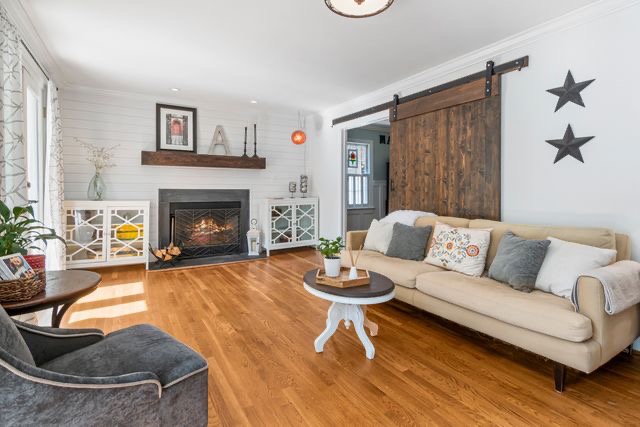
How to Choose the Right Wood Tone for a Warm, Farmhouse-Inspired Home
Wood tone might be the single most influential decision in a farmhouse-inspired room, more than the furniture, the paint color, or even the decor layered on top. It sets the temperature of the whole space, and getting it right is what makes a room feel warm and collected rather than cold or mismatched. Here’s how to think through the choice.
Start With the Mood You’re After
Farmhouse style covers a wide range, from bright and airy modern farmhouse to deep, moody, antique-inspired spaces, and wood tone is one of the biggest levers for landing in the right place. Lighter tones, like whitewashed oak or pale ash, lean into that airy, Scandinavian-farmhouse feel and tend to make a room feel larger and brighter. Warmer mid-tones, like honey oak or golden hickory, lean into a cozier, more traditional farmhouse look. Deeper tones, like walnut or aged chestnut, bring a moodier, more antique character that pairs well with vintage furniture and darker accent walls.
FLOOR360 in Madison and Milwaukee, WI and their designers work with homeowners on exactly this kind of decision, helping match wood tone to the overall feel a space is going for.
Consider the Room’s Natural Light
Rooms with limited natural light tend to feel more inviting with a lighter or mid-toned floor, since dark wood can make an already dim space feel closed in. Rooms that get plenty of sunlight throughout the day have more flexibility to handle a deeper tone without feeling heavy, and can even benefit from the contrast a darker floor creates against bright walls and big windows.
Think about Undertones, Not Just Light or Dark
Wood has undertones just like paint, and getting them right matters as much as the overall lightness or darkness of the floor. Warm undertones, like the reddish or golden hues in red oak or cherry, tend to pair beautifully with the earthy, natural palette common in farmhouse interiors. Cooler undertones, like the gray or ash-toned finishes popular in modern farmhouse design, work well with a more neutral, muted color scheme. Mixing warm-undertone wood with a cool-toned room, or vice versa, is one of the more common mismatches that can make a space feel slightly off without it being obvious why.
Let Existing Elements Guide the Decision
If you’re refinishing existing floors or adding new flooring to a home with fixed elements already in place, like stone countertops, brick, or existing trim, those materials should inform the wood tone rather than the other way around. Pulling a tone that complements the warmth or coolness already present in the home creates a much more cohesive result than choosing a floor color in isolation.
Reclaimed and Distressed Wood Bring Their Own Tone Story
Reclaimed wood and distressed finishes, both staples of farmhouse design, often carry more tonal variation within a single floor than a uniform stained finish would. This variation is part of the appeal, giving a room that collected-over-time character farmhouse style is known for, but it’s worth seeing a sample in your actual space before committing, since the mix of tones can read very differently under different lighting.
Test Samples in Your Actual Space
Wood tone can look noticeably different depending on the light in a room, the time of day, and the surrounding wall color, so it’s worth resisting the urge to choose based on a showroom sample or an online photo alone. Bringing a physical sample into the room, viewing it at different times of day, and setting it next to your existing furniture and trim gives a far more accurate sense of how it will actually look once installed.
Don’t be Afraid to Mix Tones Intentionally
A single uniform wood tone throughout an entire home isn’t a requirement, and many farmhouse-inspired homes benefit from a bit of intentional variation between rooms. A warmer tone in a cozy living room paired with a lighter tone in a bright kitchen, for example, can work well as long as there’s a common thread, whether that’s a shared undertone or a complementary color palette tying the spaces together.
Getting it RIght the First Time
Wood flooring is a long-term investment, and refinishing or replacing it because the tone didn’t turn out as expected is an expensive do-over. Taking the time to test samples, consider your lighting, and think through the mood you’re going for pays off on a floor that feels like it was always meant to be there.
I would love for you to follow us on Instagram, Pinterest, TikTok, and Facebook! You can also join our email list so you don’t miss any fun blog posts or designing spaces.